Nhandu
- Nov 13, 2025
- 3 min read
Updated: Dec 1, 2025
Nhandu is a small genus of South American tarantulas first established by Brazilian arachnologist Sylvia M. Lucas in 1983 to house Nhandu carapoensis, the Brazilian Red. In the mid-1980s it was briefly proposed that Nhandu should be merged into the Central American genus Sericopelma, but later taxonomic work rejected that idea and kept Nhandu as a valid, separate lineage.
During the 1990s a closely related genus, Brazilopelma, was created for B. coloratovillosum. In a major 2001 revision of Vitalius, Nhandu and Proshapalopus, Rogério Bertani showed that Brazilopelma and Nhandu were actually the same thing, sinking Brazilopelma and transferring its species as Nhandu coloratovillosus. That same work also described Nhandu cerradensis and moved the species long known as Vitalius vulpinus into Nhandu. Later studies demonstrated that “Nhandu vulpinus” is the same species as Nhandu tripepii, so vulpinus is now treated as a junior synonym.
More recently, several names familiar in the hobby have shifted out of the genus. The striking Brazilian Red & White, once known as Nhandu chromatus, was transferred to the genus Vitalius after a 2023 cladistic revision, and Nhandu sylviae was likewise moved to Vitalius soon after its description. The name Nhandu tripartitus has also been folded into N. carapoensis after closer study of type material.
According to the World Spider Catalog, Nhandu is currently a Brazil–Paraguay genus containing four accepted species: N. carapoensis, N. cerradensis, N. coloratovillosus and N. tripepii. Together they represent a compact but well-studied group of robust, ground-dwelling theraphosids that has long been popular with keepers and taxonomists alike.
Nhandu tripepii
Common name: Brazilian Giant Blonde
Origin: Northern Brazil (notably Pará and surrounding regions)
Lifestyle: Terrestrial, opportunistic burrower; lives on or just below the forest floor
Adult size: ~6–7 in (15–18 cm) leg span, females larger and heavier than males
Growth rate: Medium to fast; females can live 10+ years in captivity
Temperament: Skittish and defensive; strong feeding response, quick to kick urticating hairs, not recommended for handling
Color & appearance:
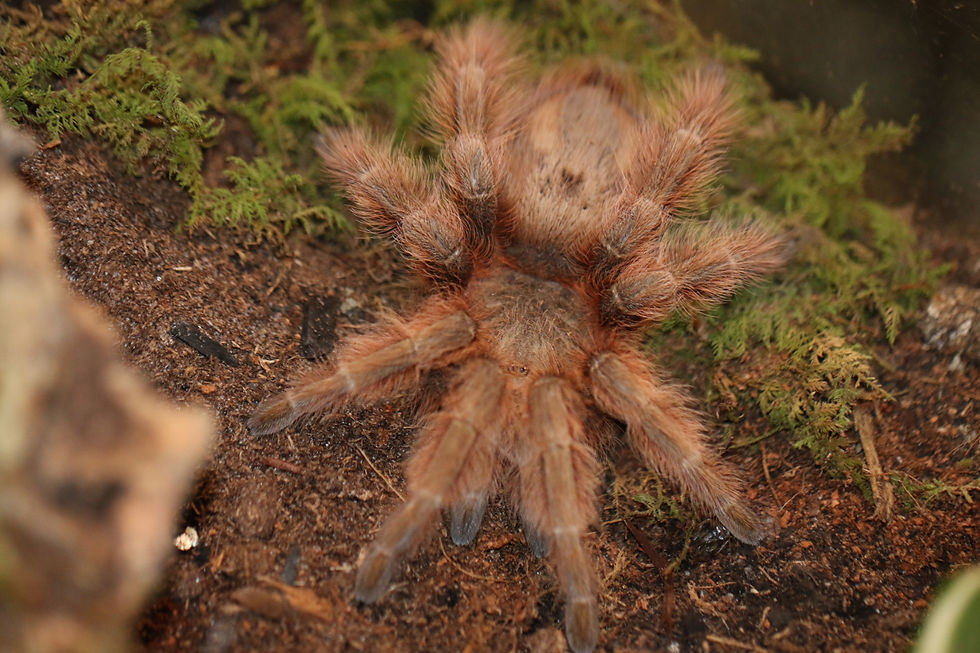
Adults: Densely covered in long, plush hairs in tan-to-golden/blonde tones, with a softer tan–brown carapace
Juveniles: Darker and browner, gradually “blonding out” with each molt
Species History
Nhandu tripepii, commonly known in the hobby as the Brazilian Giant Blonde, is a large terrestrial tarantula native to northern Brazil. First described by Edouard Dresco in 1984 as Eurypelma tripepii from material collected in Pará, the species was briefly transferred to Hapalopus as taxonomists refined mygalomorph genera. A very similar tarantula from the same region was later described as Vitalius vulpinus and then moved to Nhandu as Nhandu vulpinus. In 2009, a detailed re-examination of the type material showed that these names referred to the same species, establishing Nhandu tripepii (Dresco, 1984) as the valid name and treating N. vulpinus as a junior synonym. Today, the World Spider Catalog lists Nhandu tripepii as an accepted species of Nhandu, distributed in Brazil (notably the states of Pará and Maranhão), and it is firmly established in the hobby under the “Brazilian Giant Blonde” name.
Key sources behind this summary: Nagahama, Fukushima & Bertani 2009 (Zoologia) for the synonymy work; the World Spider Catalog for current status and synonym list; and hobby literature for common names and general natural history.
Natural Habitat
Nhandu tripepii is a terrestrial tarantula from northern Brazil, with confirmed records from the state of Pará and surrounding regions. It lives on the forest floor in warm, humid lowland habitats, where temperatures typically stay in the mid-20s °C (high 70s °F) with high year-round humidity. In nature, these spiders shelter in shallow burrows or under roots, logs, and dense leaf litter, emerging at night to hunt. Their environment ranges from rainforest and forest edge to more open, savanna-influenced areas that still offer deep, slightly moist soil and plenty of ground cover. Enclosures that provide a warm, humid microclimate, several inches of diggable substrate, and secure hiding places most closely replicate this species’ natural conditions.
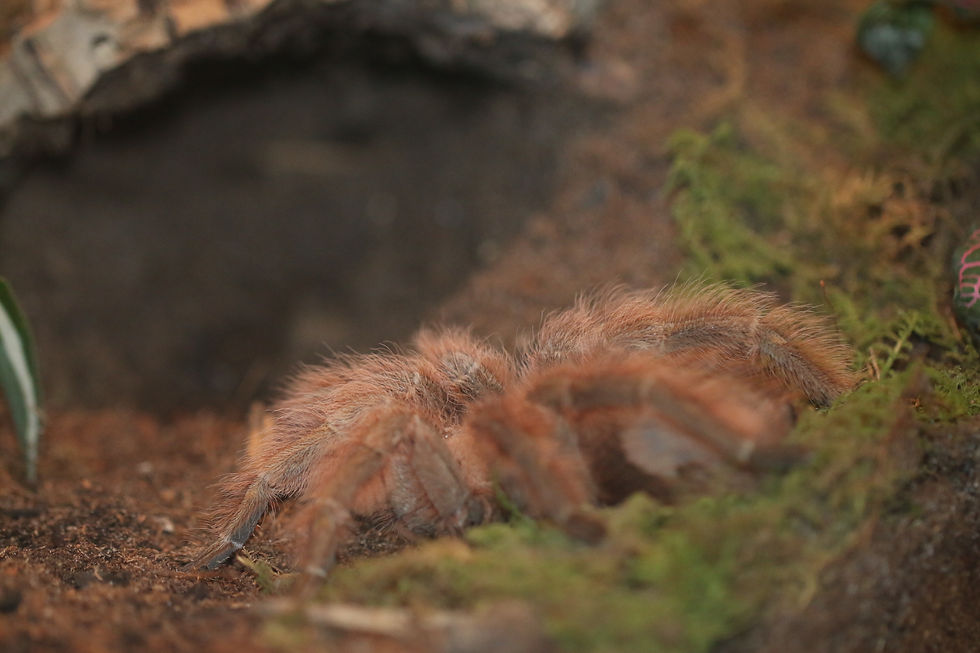
Our Specimen:
Given name: Emily
Sex: Female
Life stage: Adult
Approximately 7 in
Thick-bodied healthy specimen
Flighty when disturbed
Aggressive eater
Always out in the open. A fan favorite.



Comments