Davus
- Nov 23, 2025
- 3 min read
The genus Davus was established by O. Pickard-Cambridge in 1892 to describe a group of small, boldly patterned New World tarantulas now popularly known as tiger rumps. The type species, Davus fasciatus, comes from Costa Rica and Panama and helped define the classic look of the group: a compact terrestrial spider with a copper to orange carapace and a striking banded pattern on the abdomen.
For much of the 20th century, Davus species bounced around the literature and were at times lumped into the related genus Cyclosternum, creating confusion over names like Cyclosternum pentalore and Davus pentaloris. Modern taxonomic work, including a major revision in the 2010s, restored Davus as a valid genus and clarified which species truly belong in it. Today, the World Spider Catalog recognizes four species: D. fasciatus, D. pentaloris, D. ruficeps, and D. santos, all native to Mexico and Central America.
Recent integrative studies have shown that the widespread Davus pentaloris—the familiar Guatemalan tiger rump in the hobby—actually hides substantial genetic and morphological diversity, suggesting that more Davus species may eventually be described from this complex. Thanks to their vivid striping, manageable size, and generally tolerant temperaments, Davus tarantulas have become established favorites with collectors and are now some of the most recognizable dwarf New World species in the trade.


Davus pentaloris
This dwarf species is native to El Salvador, Guatemala, Honduras, and Mexico. Considered to have complex morphological variation. Small to medium size tarantula, growing to approximately 4 to 4.75 inches. Considered to be quick and relatively skittish. Has type III urticating hairs. Beautiful species, with an orange abdomen and black tiger striped pattern. The pentaloris has an orange carapace while the fasciatus has a dark carapace.
Habitat: tropical forests, humid grasslands. Makes its home in leaf litter, logs, and abandoned burrows. Essential to maintain suitable humidity.
Husbandry Notes:
Given name: Horchata
Sex: TBD
Life stage: Juvenile
Approximately 2.75 in
Steady growth
Typically an aggressive eater
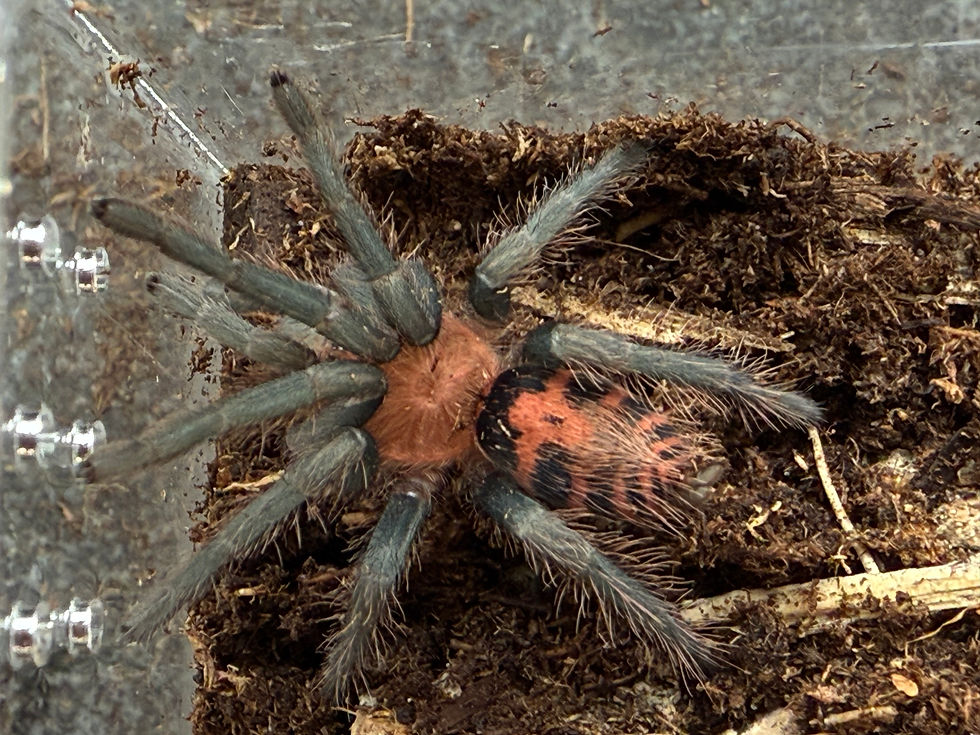
Genus and species: Davus fasciatus
Common name: Costa Rican Tiger Rump
Given name: Hershey
This species is native to Costa Rica and Panama. Small to medium size tarantula, growing to approximately 4 to 4.75 inches. Adults typically have a dark carapace whereas D. pentaloris has an orange carapace.
Habitat: tropical forests, humid grasslands. Makes its home in leaf litter, logs, and abandoned burrows.
Note: our specimen appear to be a morph of D. pentaloris, but tbd until next molt.
Husbandry Notes:
Enclosure: 4x4x4
Sex: TBD
Life stage: Juvenile
Size: Approximately 1.5 in
Growth: Steady, recently molted (May 2025)
Disposition: Generally active
Eating habits: Typically eats well
Misc: Doing well and eating well

Genus and species: Davus sp. Panama
Common name: Lava Spider
Given name: Cyra (deceased)
This dwarf species is endemic to Panama. They are known for their bright red and orange coloration, resembling Lava. This is a desired species in the hobby, with rising prices reflective of this.
Habitat: tropical forests, humid grasslands. Makes its home in leaf litter, logs, and abandoned burrows.
Husbandry Notes:
Enclosure: 8x8x8
Flora: Bio naturalistic
Sex: Female
Life stage: Adult
Size: Approximately 4 in
Growth: Stable
Disposition: Generally in the open with periods of being reclusive.
Eating habits: Has not been an aggressive eater, particularly as of late.
Misc: Has not developed a particular personality trait as of yet.


Comments